Tuesday, October 19, 2010

Halloween part 2

Where in the world? Ireland

It is believed that Halloween was started in Ireland. They celebrate it much like we do here in the United States. They have bonfires and children trick or treat (or sometimes called "help the Halloween party") for candy around their neighborhood at night. Then most people attend parties with neighbors or other friends. At these parties, games are played and a scavenger hunt is sometimes arranged for children. Barnbrak is a typical food around this holiday, it is a fruitcake. A treat is hidden inside the cake and brings fortune to whoever finds it. The tradition meal consists of a Boiled Potato, Curly Kale (cabbage) and a raw onion. On this night kids may also play tricks on their neighbors such as knock-a-dolly which is similar to ding dong ditch. Although some of these traditions such as trick or treating and carving pumpkins are the same, they also have a variety of different traditions unique to them.

For More Irish Halloween traditions click HERE

Saturday, October 16, 2010

Turban/pagri/dastaar


Where in the world? India

       Although most people know this head piece as a Turban, it is also called a Pagri, or Dastaar in India. When you think of a Turban most people associate it with Indian Culture, but actually only 10% of men in India wear a Turban regularly. This religious head piece is made of a fine piece of muslin (cotton). This cotton is very light weight, fits the shape of your head when raped, and soft making it very comfortable. This is washed weakly and kept very clean. The pieces of fabric are 5 meters long, and one meter wide! Various colors and styles can be chosen from, as shown in pictures below. Many say that this is worn by people of high class, but the main reason is it worn is to show their sovereignty, dedication, self-respect, courage and piety. It is also to show love and respect for the founder of the Khalsa Guru Gobind Singh. It is closely tied to the religion of Sikhism, where wearing a Turban is mandatory for their religion although many other religions may incorporate it into their lives as well.

"The turban is our Guru's gift to us. It is how we crown ourselves as the Singhs and Kaurs who sit on the throne of commitment to our own higher consciousness. For men and women alike, this projective identity conveys royalty, grace, and uniqueness. It is a signal to others that we live in the image of Infinity and are dedicated to serving all. The turban doesn't represent anything except complete commitment. When you choose to stand out by tying your turban, you stand fearlessly as one single person standing out from six billion people. It is a most outstanding act." quoted from Sikhnet.

Tuesday, October 12, 2010

Halloween part 1 (Mexico)

                                                                            Where in the World? Mexico
I was talking with my friend today about the upcoming Halloween holiday and I started wondering about how other country's celebrate this holiday. Mexico's Halloween leads up to the Day of the Dead. In Mexico people have picnics on family members graves as a day of remembrance on Halloween. It is a day of celebration and happiness for many. They bake bread, and make candy in Halloween shapes such as a skull or skeleton. Their version of trick or treating is kids running around the streets with lanterns asking for coins. To guide the souls of the dead home they light up their homes with lanterns or bonfires. This tradition goes along with some other holidays remembering the dead, including  Dia de los Muertos, and Fiesta de las Santas Animas. 


Monday, October 11, 2010

Chinese Influence in Canada

Where in the world? Vancouver

            Many people do not realize the big influence of Chinese culture in Vancouver, Canada. People even used to call this area Hongcouver. This is due to the fact that there was a major migration wave in 1997. This migration wave brought wealth and prosperity to the city. The chinese came to this area after the British retook over in their towns, they came to Vancouver as a safe place to stay. These immigrants were wealthy, educated, and spoke english well. This made Vancouver change for the better since these asians wanted the best education for their kids, wanted to live in the best neighborhoods, and therefore made the city more global in the process. Many of the citizens of Vancouver were outraged by all of this. Their neighborhoods were getting distroyed to build bigger home with a more asian influence in them. Also, the best schools were getting more crowded. These controversys have been settled through the years. Has anyone ever traveled there and witnessed the chinese influence on their culture?

Want to learn more?

Tuesday, October 5, 2010

St. Nick

Where in the world? Belgium

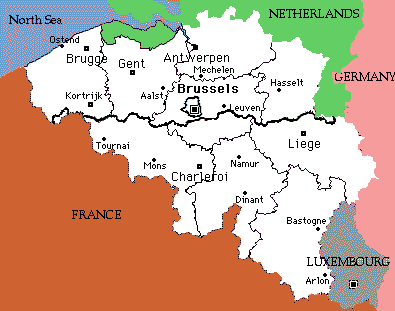
         Every year on December 6th, my family celebrates a holiday that many people don't know about. We used to live in Belgium, when I was young, where this holiday is celebrated. On the night of December 5th, children leave their shoes near the door. St. Nick (similar to Santa) comes down the chimney and leave chocolates and small gifts. Unless you are bad that year, then he leaves coal or twigs. Americans took this idea in the form of a Christmas Stocking. Many refer to St. Nick as the "Real Santa." Many can visit him in malls, where children greet him and receive a small gift. He also visits schools or clubs to ask if you have been nice during the year. Many children in America leave milk and cookies for Santa, but for this holiday, children leave something for the saints horse and often a glass of wine for the saint. Does anyone else celebrate this holiday or another that many are not aware about?


To see how other countries celebrate this holiday visit : http://www.stnicholascenter.org/Brix?pageID=76

Monday, October 4, 2010

Burning of the Ribbons

                                                                                   Where in the world? Portugal 

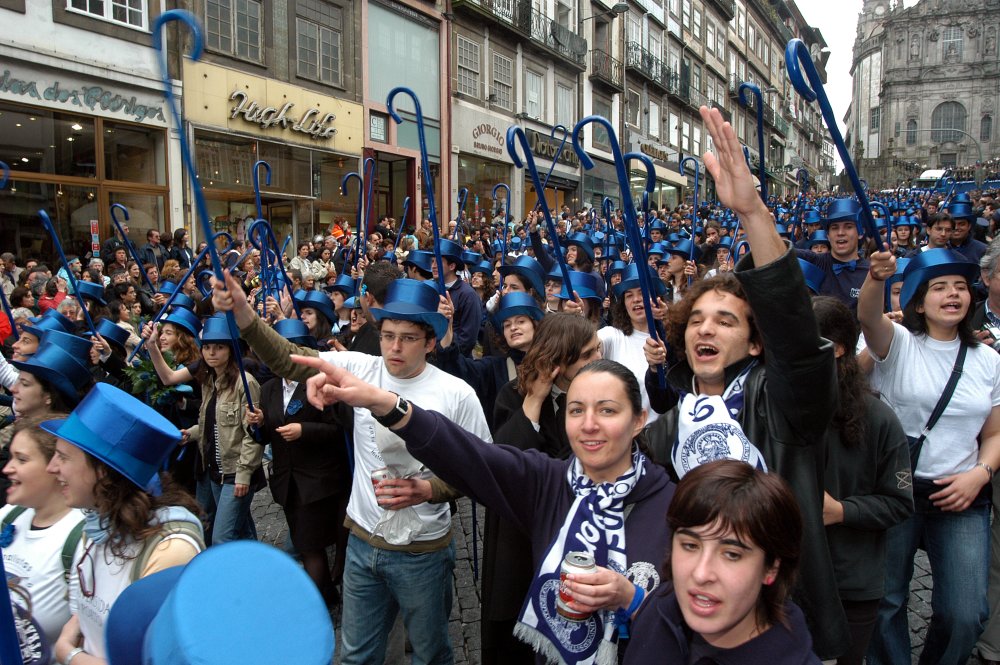
Queima das Fitas is Portugal for "Burning of the Ribbons." This is a traditional festival celebrated by students. Originated from the University of Coimbra, the oldest university in Portugal, but now celebrated in many universities across the country. This takes place after graduation, in may, and each course has its own ribbon. It lasts for 8 days, one for each course. (Letters, Law, Medicine, Sciences & Technology, Pharmacy, Economics, Psychology & Education Sciences and Sports Sciences & Physical Education) This turns Coimbra into a lively city, with concerts and performances as well as a parade by the students. The parade is the thing everyone looks forward to, and spectators look forward to watching it. It is named after the fact that everyone has a narrow ribbon, which they all burn in the Old Square in the University. After this, they replace this one by a larger one they keep until they graduate.

Wednesday, September 29, 2010

Foot Binding

Where in the world? China

     This ancient tradition started in the 10 century, until 1911 when it was banned by the Chinese republic. Now if this was performed the mothers would get charged with child abuse. This was practiced by young women and girls as young as the age of five. Binding of the foot resulted in life long disabilities for many of the women who partook in this tradition. Some feet were even broken or fractured in order to get the desired result of a smaller foot. There are many different reasons why people think that this tradition was practiced. They thought it was fashionable and a distinction to have bound feet to the point where some were even "nonfunctional feet." The smaller the women’s foot, the more wealthy they seemed. During the first year of this process, girls would have 4 of their toes broken and knit together making sure their feet looked smaller. They would have to walk on their heels so they would not have pain. Another different opinion on why these girls had bound feet was that their husbands wanted to keep them from having any life outside the home. Their bound feet kept them from being mobile. Some women were even killed or sent away if they did not have their feet bound because it showed that they were not capable of marriage. Various opinions have been stated as to why they did this, some say fashion, others say it was for their husbands. Either way, they suffered tremendous pain and it is sad to see pictures and videos of it.